Table of Contents
History of Holy Week in Córdoba
Holy Week in Córdoba has its roots in the Middle Ages, when the first brotherhoods began to take to the streets with penitential purposes. Little by little, these religious acts evolved into true expressions of faith and art that mobilize the entire city. In the 16th century, the tradition experienced a major boost, especially thanks to the work of religious orders and the rise of Andalusian imagery, which produced sculptures of great artistic value. Since then, Córdoba’s Holy Week has continued to grow in the number of brotherhoods, organization, and neighborhood involvement.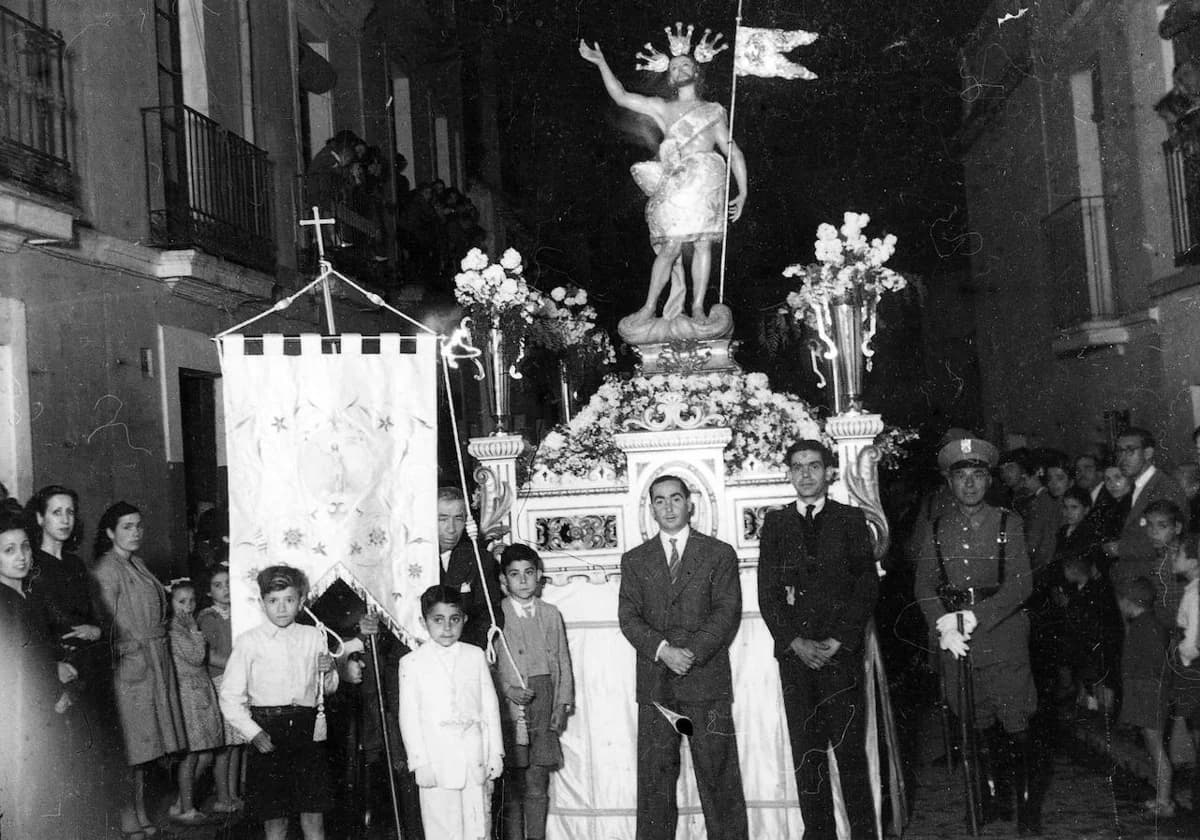
Glossary of Holy Week in Córdoba
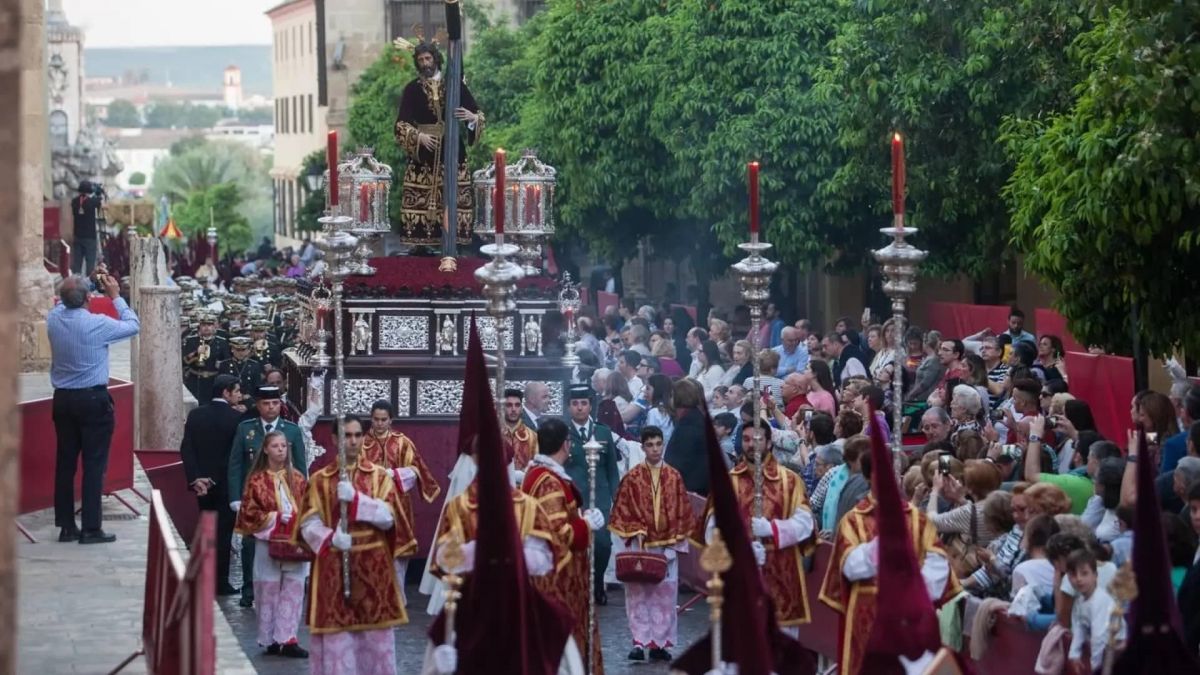
So you don’t get lost with the words most often heard during these days, here’s a short glossary that’s simple and easy to understand:- Brotherhoods or confraternities: religious associations formed by the faithful, in charge of organizing the processions. Each has its own history, titular images, and route.
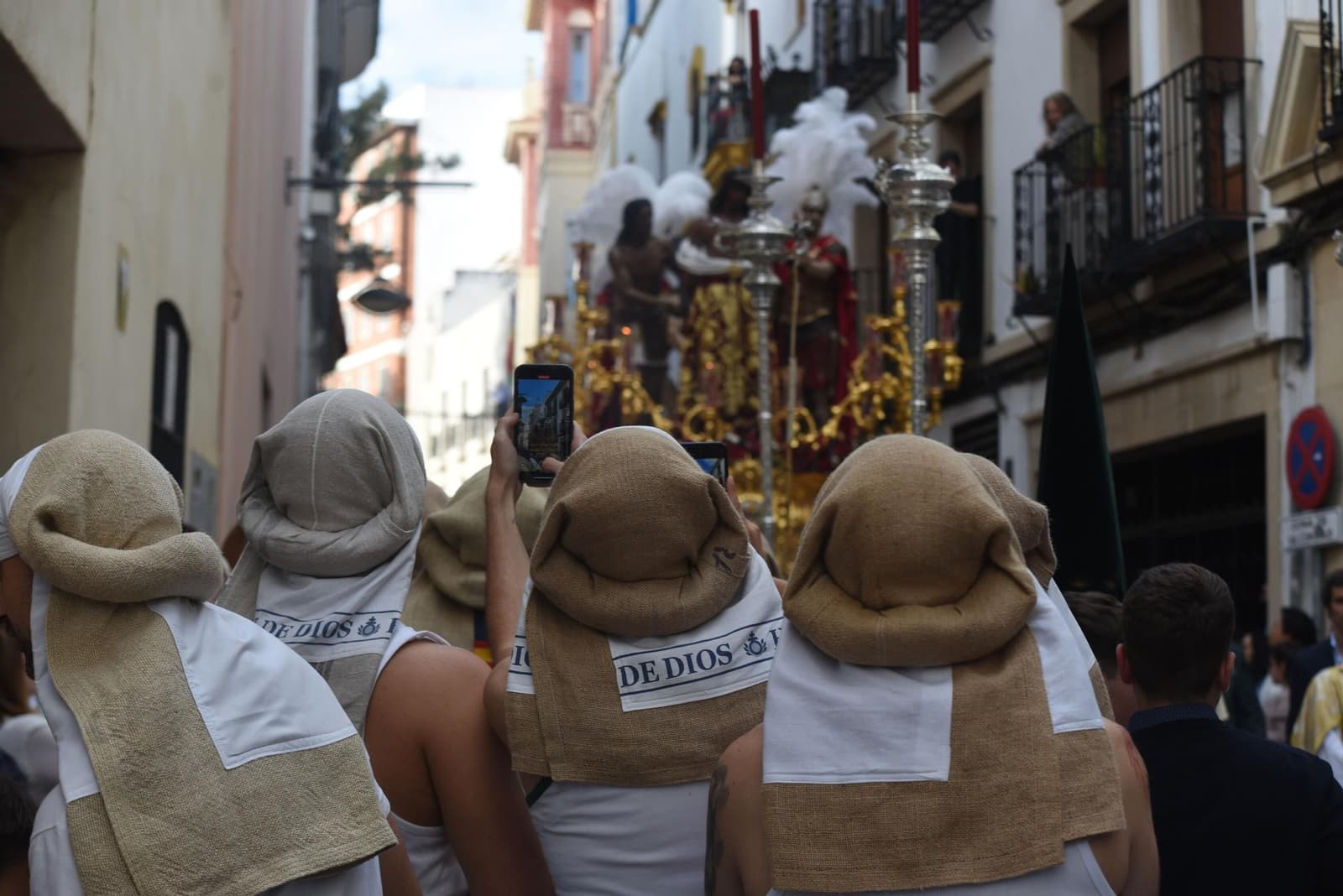
- Nazarenes: members of the brotherhoods who take part in the procession dressed in tunic and hood.
- Pasos: structures carrying the sacred images on platforms. They are usually richly decorated with flowers, candles, and artistic details.
- Costaleros: men (and increasingly women) who walk beneath the pasos, carrying them on their shoulders and necks. They are the true anonymous protagonists of each procession.
- Pregonero: the person in charge of officially announcing Holy Week with a proclamation, usually full of emotion and personal references.
- Saeta: a spontaneous flamenco song sung to a passing image, usually from a balcony. It is one of the most moving moments.
- Stands and chairs: paid seating placed along the official route to watch the processions comfortably.
Date of Holy Week
Holy Week in Córdoba does not have a fixed date: every year it depends on the liturgical calendar, but it always takes place in spring, between March and April. This means that each edition is different: some years you enjoy mild temperatures and long days, while others are still chilly, making a coat advisable at night.Check the official dates in advance (they are usually published on the Brotherhoods’ Association website) to plan your trip, book accommodation, and secure a seat in the stands or chairs along the official route.
Itinerary and routes of Holy Week in Córdoba
Holy Week in Córdoba is like a journey within the city itself: each day, each neighborhood, and each procession has a different atmosphere worth discovering.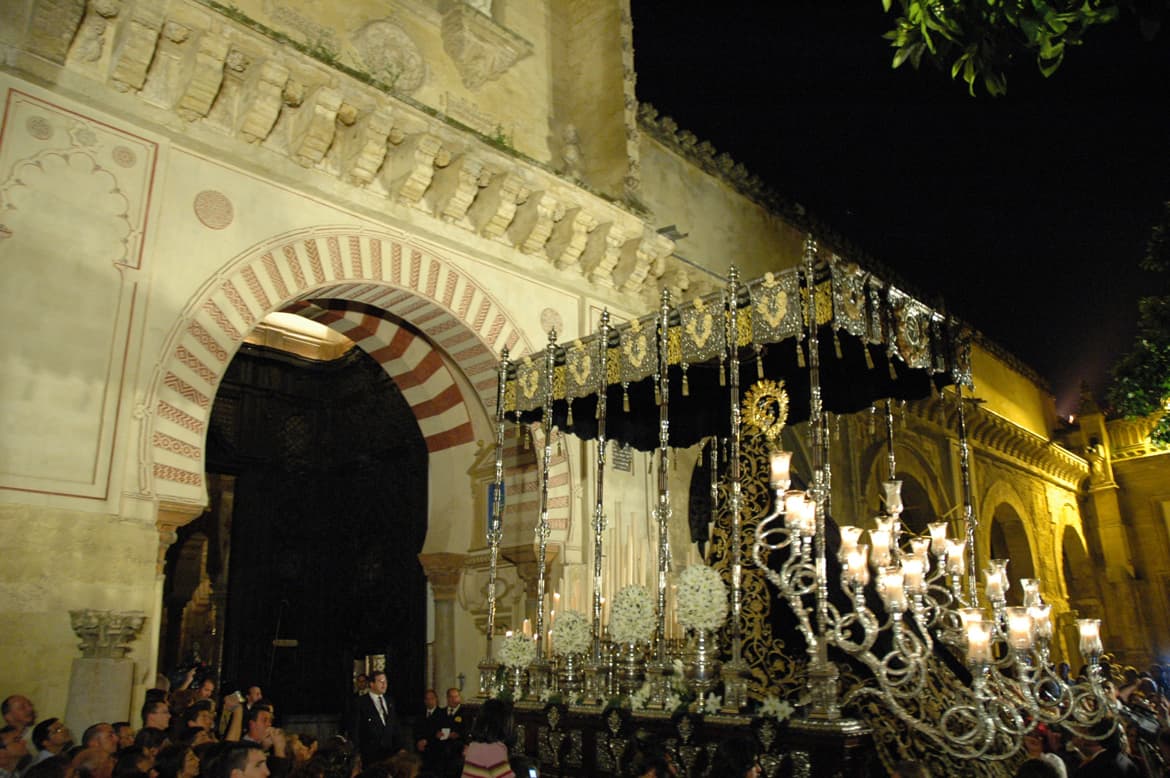
The official route and stands
If we had to find the nerve center of Holy Week in Córdoba, it would undoubtedly be the official route (the section through which all brotherhoods must pass). Currently, it is located around the Cathedral of Cordoba, making each procession a unique experience: seeing the pasos cross this World Heritage monument is something that gives you goosebumps.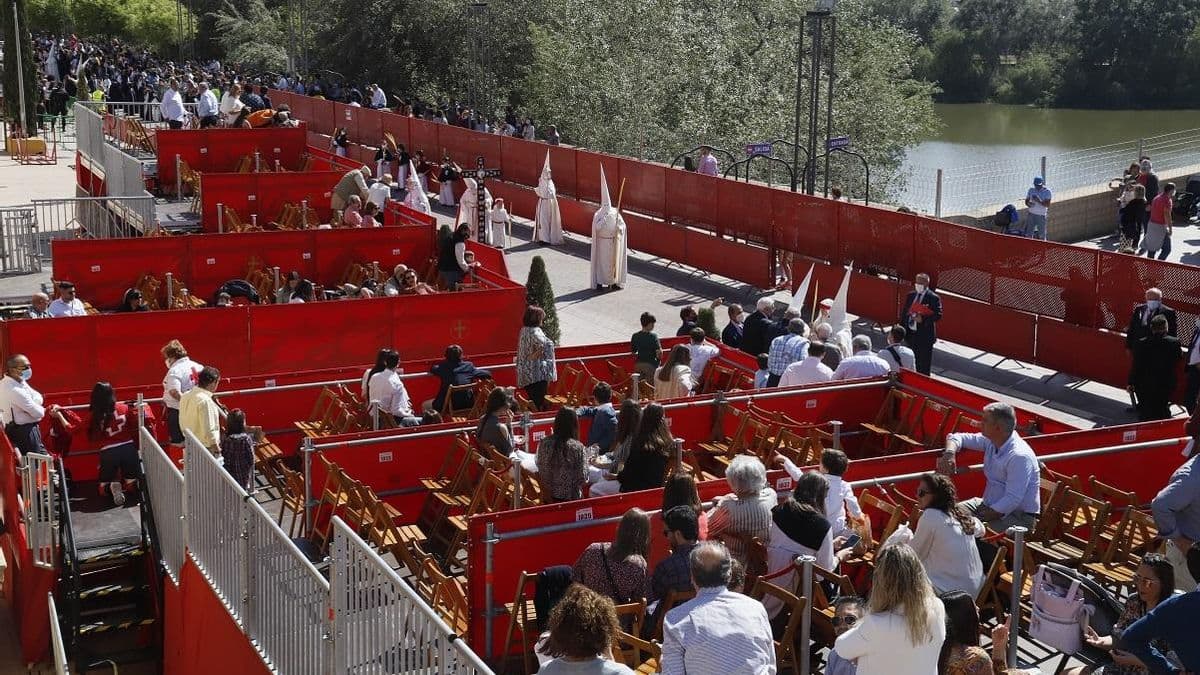
Although seeing the brotherhoods on the official route is a unique moment, if it’s your first time, we recommend combining one day on the official route with another in the neighborhoods, where the atmosphere is much more traditional and intimate.
Processions by day
One of the charms of Holy Week is that each day has its own character and personality. In fact, no two days are alike: Palm Sunday is usually more cheerful and festive while, for example, Good Friday conveys a more solemn emotion. Here’s a guide to help you understand each day and get your bearings:Palm Sunday
Holy Week begins with excitement and a family atmosphere. The Brotherhood of the Triumphal Entry, better known as “La Borriquilla” (The Little Donkey), opens the celebrations and it is common to see children dressed as Hebrews accompanying the procession.If you’re traveling with little ones, this day is ideal for them to enjoy without the solemnity of later days.
Holy Monday
A day with neighborhood flavor. The Brotherhood of the Star brings color to the afternoon, while the Via Crucis adds sobriety and silence.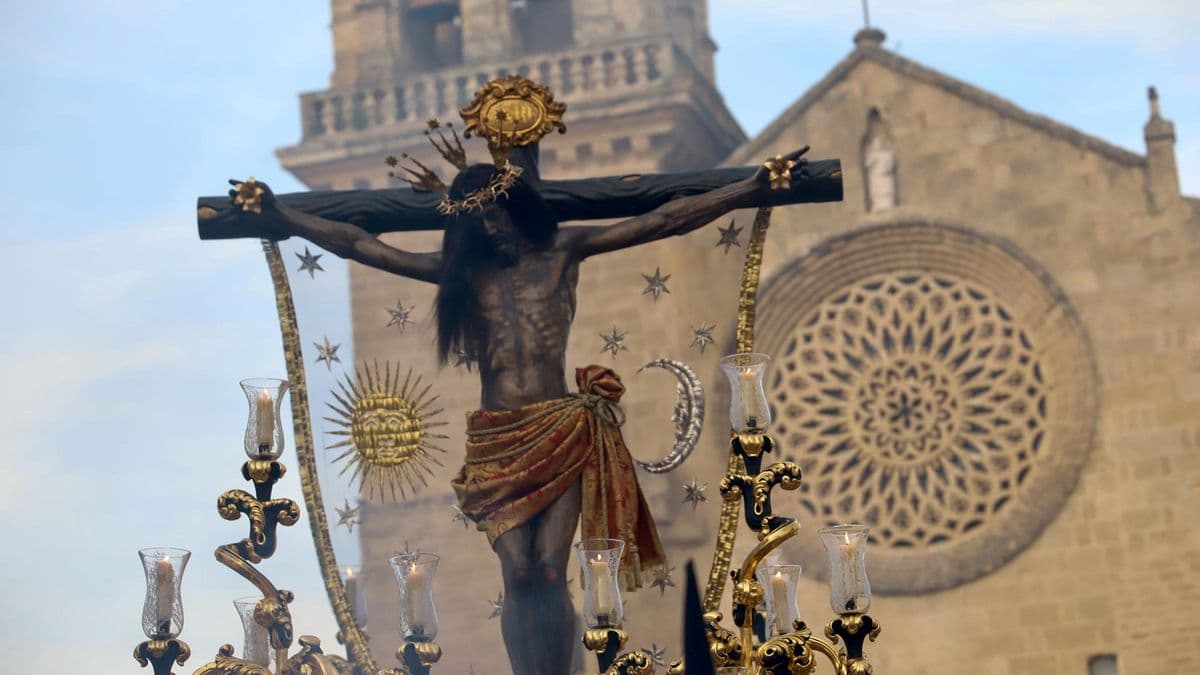
Holy Tuesday
The star of this day is the Brotherhood of the Arrest, whose entry into the Jewish Quarter of Córdoba is one of the week’s most anticipated moments. The contrast of the pasos through narrow streets and whitewashed houses creates a unique atmosphere blending history, tradition, and art. If you want to enjoy this spectacular entry, we recommend arriving early because it is one of the busiest routes.Holy Wednesday
At the midpoint of Holy Week, the main protagonist is the Brotherhood of Peace and Hope, much loved in the city. The Virgin of Hope is popularly known as “The Dove of Capuchinos” and each year thousands of people accompany her on her route.Maundy Thursday
This day is, without a doubt, the most intense of Córdoba’s Holy Week.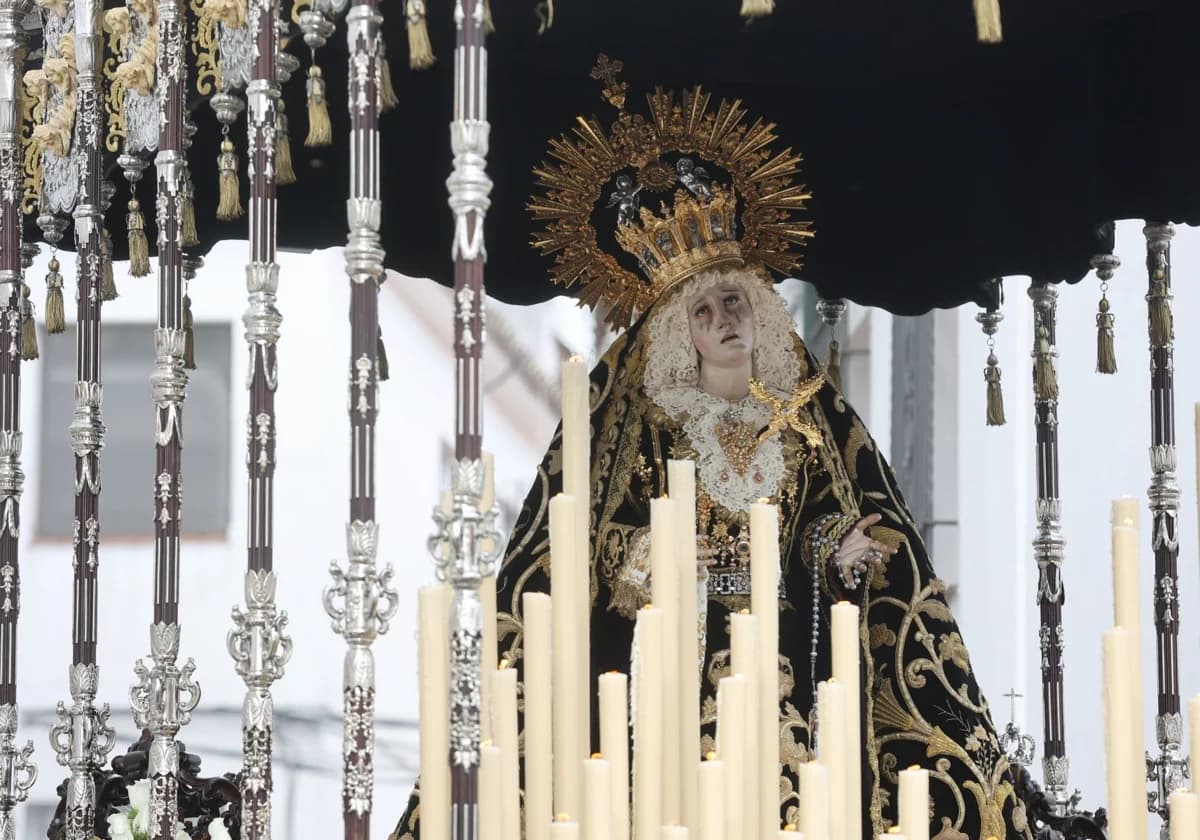
Good Friday
On Good Friday, solemnity takes over the streets of Córdoba’s historic center. The brotherhoods of La Soledad and El Santo Sepulcro convey recollection and respect on a route accompanied only by drums. A truly unforgettable experience to see and live at least once in a lifetime!Easter Sunday
After so much emotion, joy arrives with the Risen Christ. Music, flowers, and color flood the city to close an intense week and celebrate the triumph of life over death.Most famous brotherhoods and pasos
Talking about Holy Week in Córdoba also means talking about its brotherhoods. Each has its history, style, and special moments that make it unique. In this section we review some of the most beloved and recognized, those you shouldn’t miss if you visit the city during these dates. And, so you don’t get lost, we’ll also tell you what day each one processes!Brotherhood of Peace
- Day of procession: Holy Wednesday.
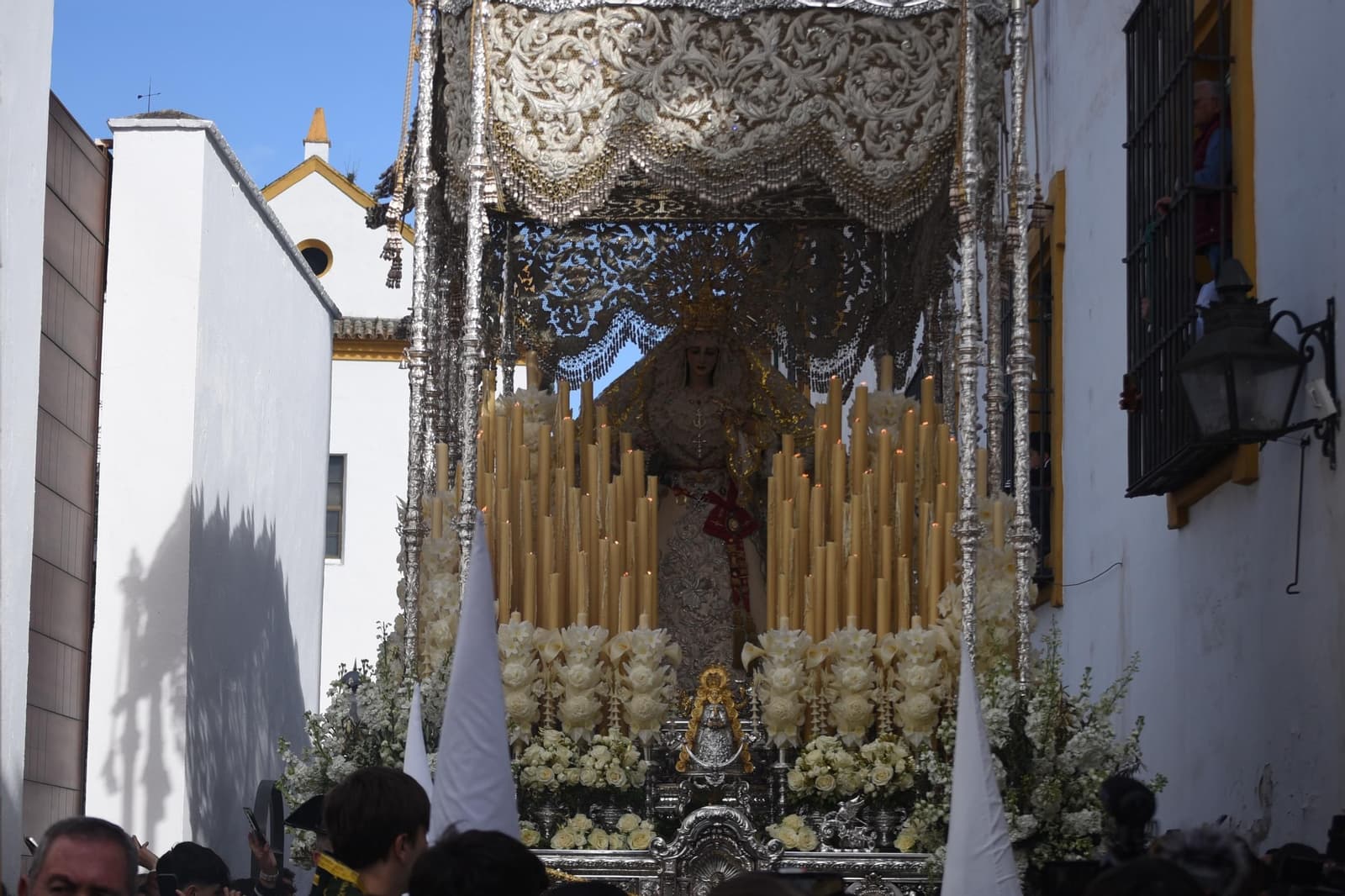
If you want to experience it like a local, head to its neighborhood too, where the atmosphere is much more intimate and emotional.
Brotherhood of the Gypsies
- Day of procession: Holy Tuesday.
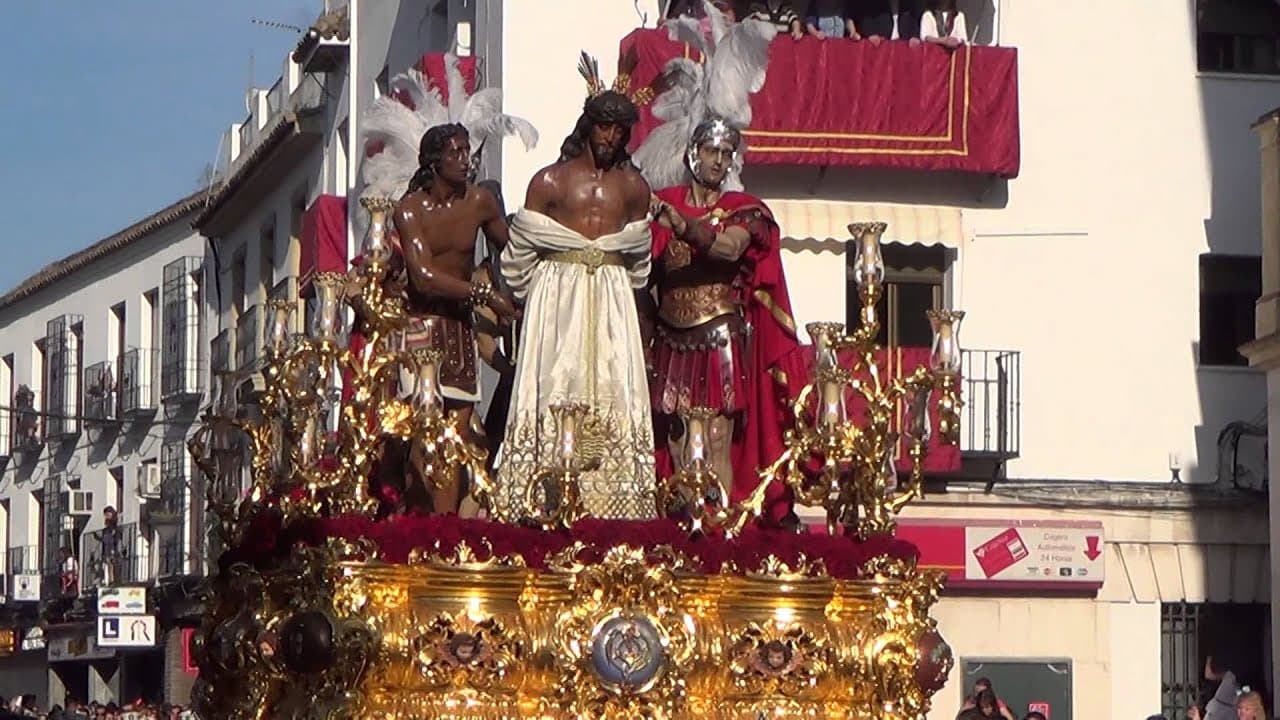
The Legion in Córdoba’s Holy Week
- Day of procession: Maundy Thursday (with the Christ of the Good Death).
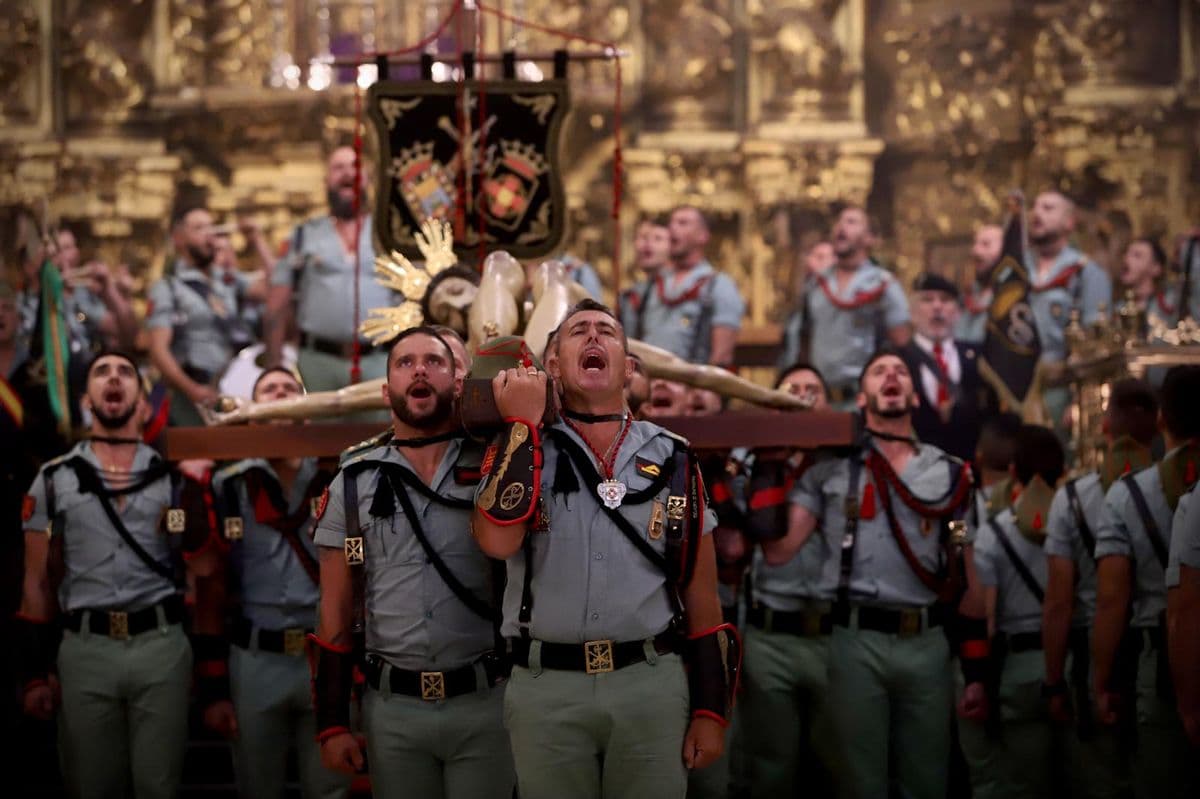
Due to the large crowds, it’s best to look for wide open spaces to enjoy the parade more comfortably.
Other notable brotherhoods
Holy Week in Córdoba features more than 35 brotherhoods. Some of the most relevant are the Brotherhood of Forgiveness, the Brotherhood of Love, or the Brotherhood of the Star, each with its own style. Some stand out for their solemnity, others for the joy of their neighborhoods, and others for the beauty of their pasos. The best plan is to combine well-known brotherhoods with less crowded ones to appreciate the full diversity of this tradition.Useful information about Córdoba’s Holy Week
Schedules, poster, and official booklet
One of Córdoba’s Holy Week classics is the official poster, presented each year with great anticipation.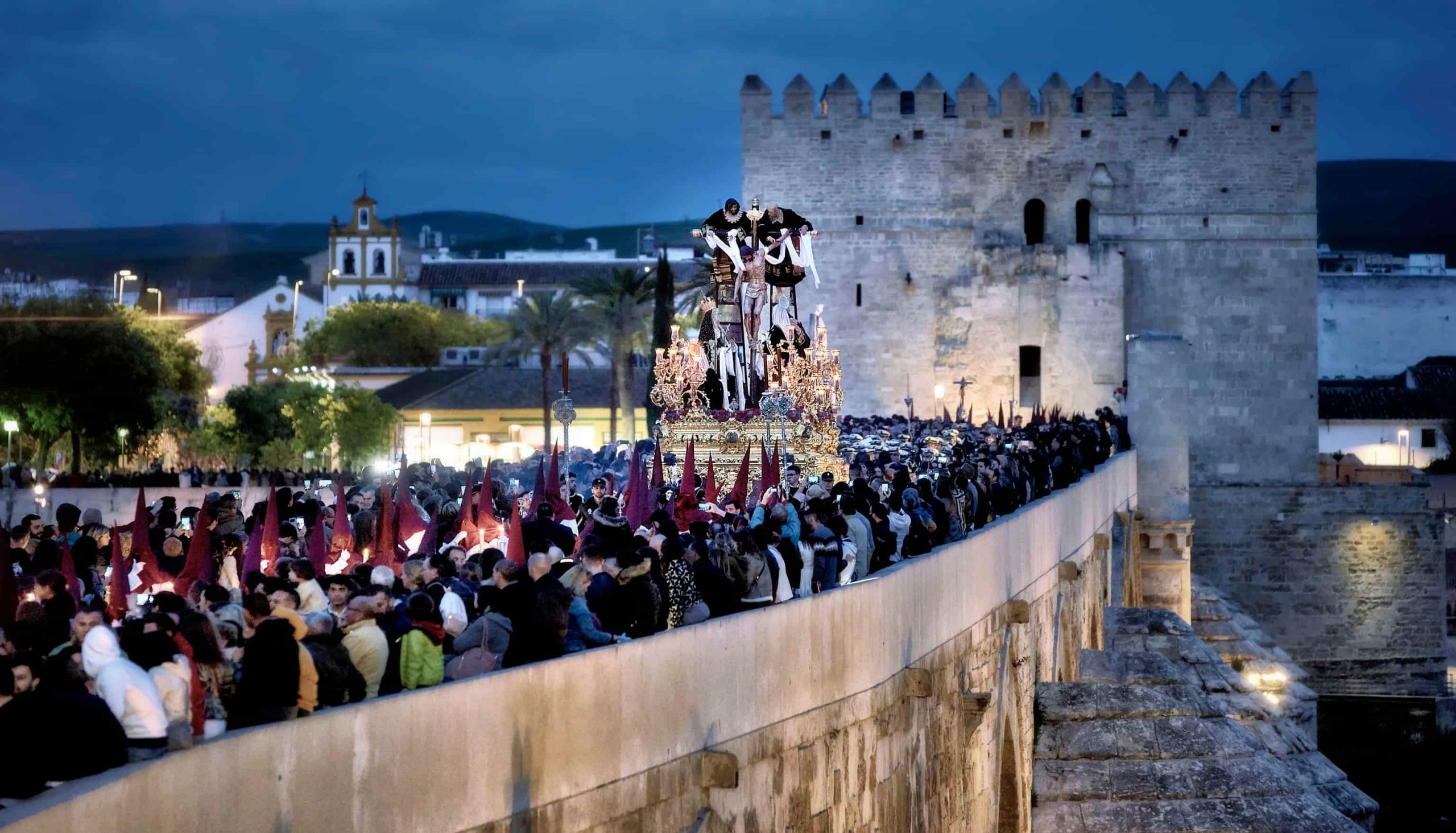
- The route of each brotherhood day by day.
- The departure and arrival times.
- Schematic maps to guide you.
- Brief notes about the images and their history.
How to get to Córdoba’s Holy Week by bus
Getting around Córdoba during Holy Week can be quite a challenge: streets closed, processions occupying entire avenues, and a historic center that turns into a maze of nazarenes, bands, and crowds. That’s why the city bus is your best ally to save time and patience. The municipal company Aucorsa strengthens its lines during these dates, adding special buses and extending hours. This way, you can reach the busiest areas without a problem, even at night, when many brotherhoods make their penitential station in complete silence. If you come from another city, Córdoba’s bus station is just a few minutes’ walk from the historic center. From there you can easily connect with urban lines that drop you off near the official route or the neighborhoods where the confraternities depart.If you decide to come by car, it’s best to park in peripheral areas or public parking lots and forget about it until the end of the day. The center gets blocked quickly and finding a parking spot near the processions is nearly impossible.